Battle mechanics guide
WOS Battle Mechanics
How troops, stats, skills, and widgets become round-by-round battle results.
 INF
INF LANC
LANC MARKINFLANCMARK
Battle dynamics
Every round is resolved for both sides together
A battle advances in rounds. Both armies choose targets, apply active bonuses, and deal damage during the same round.
Each side starts the round from last round survivors.
Chance checks, round timers, attack counters, duration and lag.
Front enemy type first, unless attack order is changed.
Both sides deal their round damage before moving on.
Formation
Troops stand one behind another
Each side has a front line, a middle line, and a back line: infantry first, lancers second, marksmen third.
INFLANCMARKAttack order
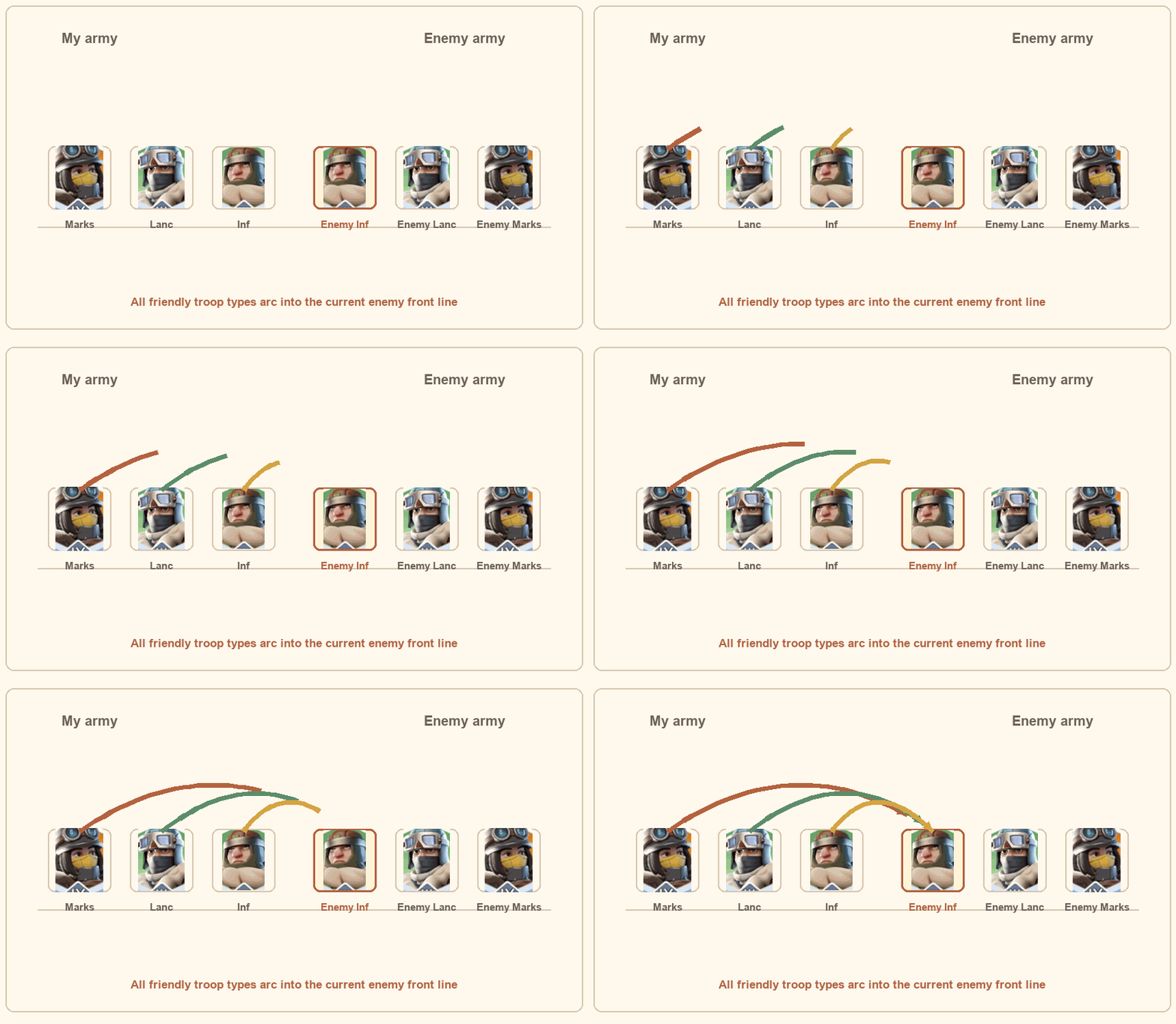
Everyone targets the enemy front line
If enemy infantry is still alive, infantry, lancers, and marksmen all attack that infantry line.
Target progression
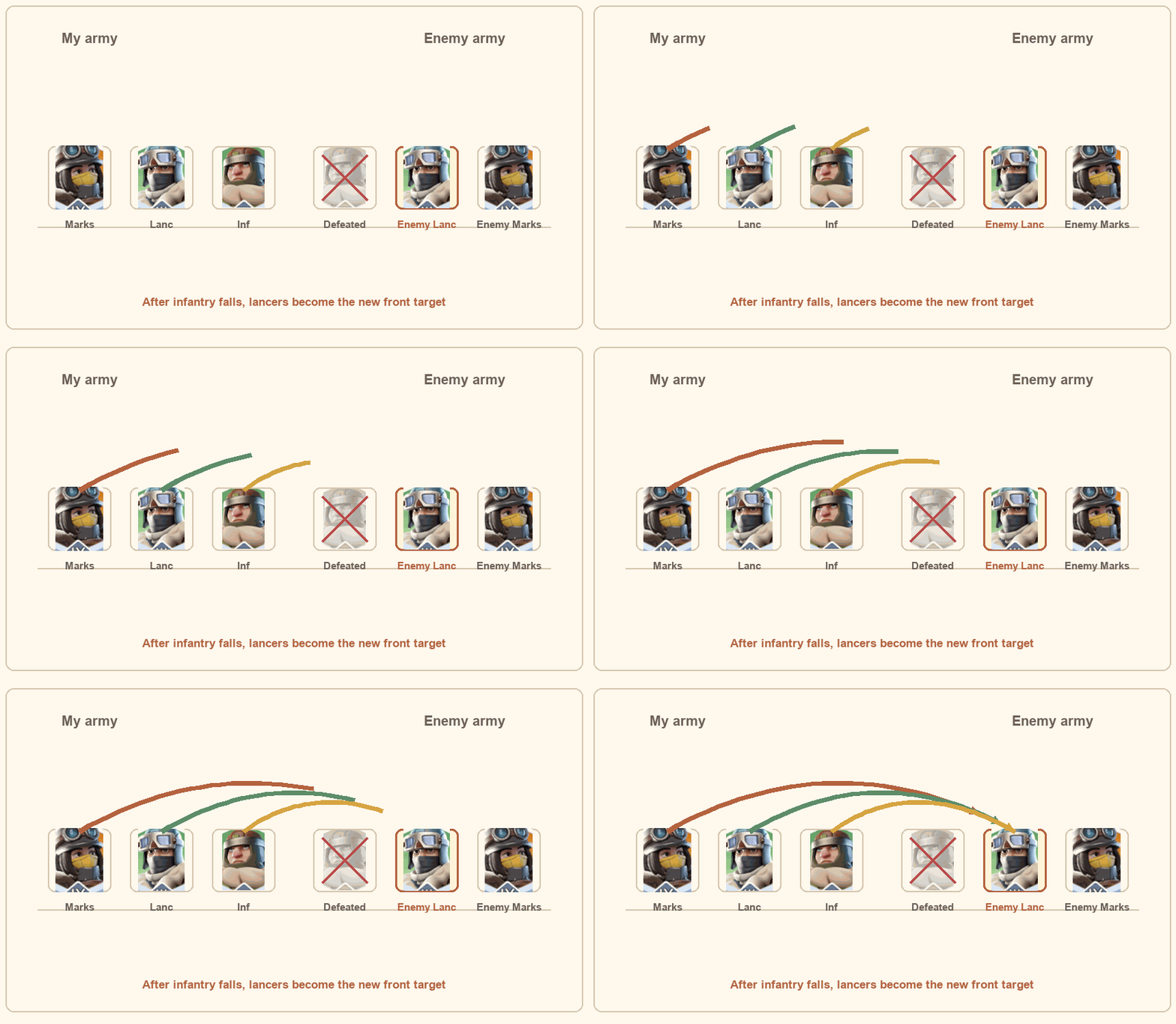
When infantry dies, lancers become the front
The target is not tied to matching troop type. It is tied to whichever enemy line is currently closest to the front.
Special targeting
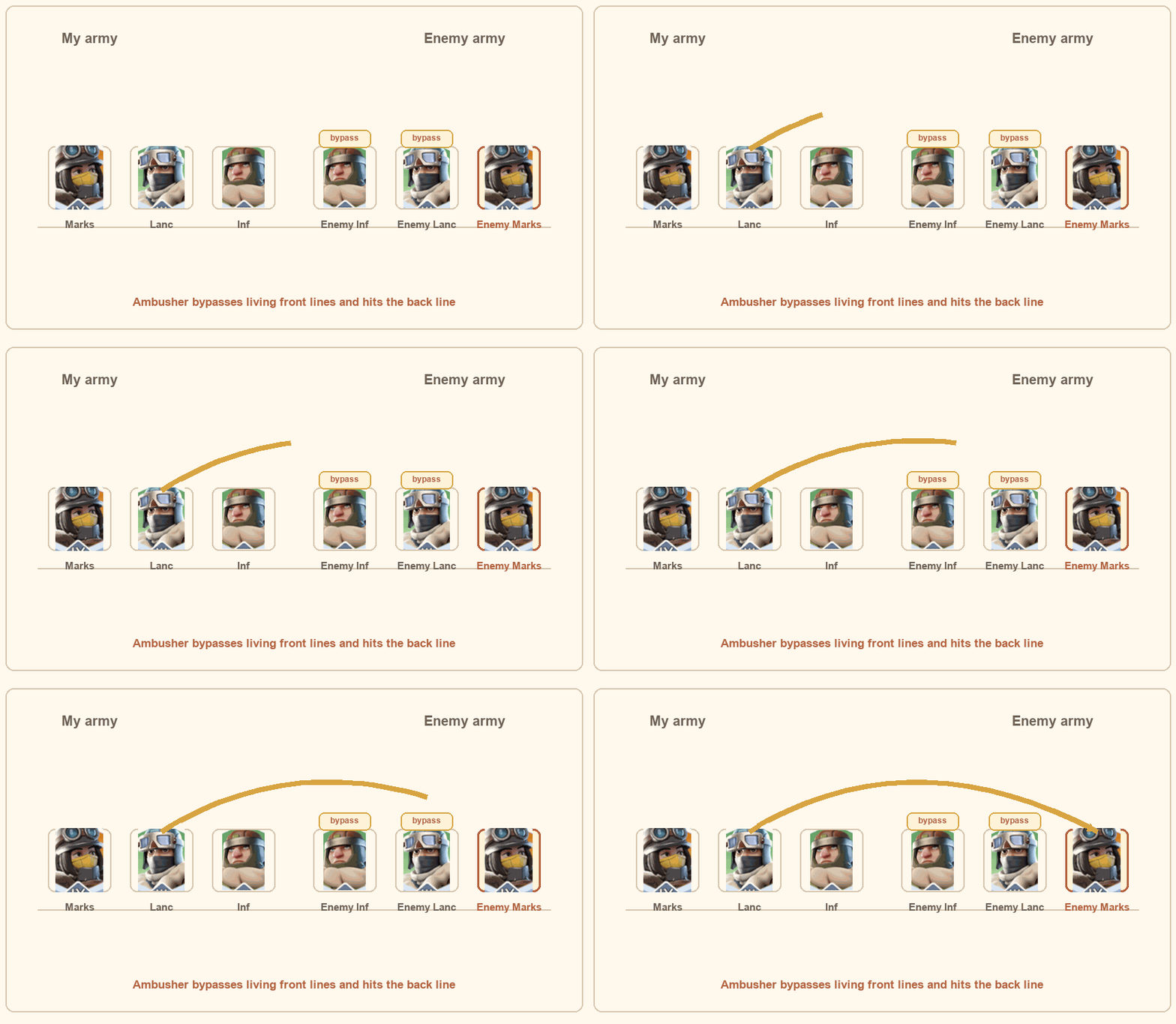
Ambusher is the exception
When Ambusher triggers, lancers bypass the living front and middle lines and attack enemy marksmen directly.
Simple damage core
Damage compares attack pressure against defensive bulk
The presentation version of the formula is intentionally simple.
Attack side: troop attack and troop damage create pressure.
Defense side: opponent defense and health absorb that pressure.
Crowding effect
More troops help, but not linearly
The battle uses square roots so a larger army gains pressure without every extra soldier adding full damage.
Going from 1,000 to 4,000 doubles pressure, not quadruples it.
Bonus sources
Stats come from the battle role and chosen heroes
The important part is knowing whose bonuses are active for that battle situation.
Rally attack
The rally caller is the main source for rally stats and rally widget bonuses.
Garrison defense
Defense uses the strong participant concept for the defending side's active bonus source.
Skills
Skills are conditions that create benefits
Each skill has timing rules, trigger rules, and a benefit scope.
Effect math
Benefits multiply the base damage result
Attack effects and defense effects are grouped, multiplied, then converted into one damage coefficient.
OppDefenseDown
DefenseUp
Widgets
Widgets are role-specific stat amplifiers
Rally widgets and defense widgets are separate families. Use the family that matches the battle context.
Rally widgets
Used by the rally caller. Can boost attack, lethality, health, or other mapped attributes.
Defense widgets
Used for garrison defense. They support the defending bonus source.
Useful details
Small rules can change the battle shape
Round kills are slightly reduced as rounds advance.
Kills cannot exceed remaining troops in the target lane.
Joiner hero skills can be added with separate prefixes.
Unlocked from troop categories and conditions.
Can stay active across rounds until their validity ends.
Targeting changes as front lines disappear.
Mental model
Battle = lanes x stats x crowding x skills
A battle is not just one army number. It is three troop lines repeatedly choosing the current front target, applying stat ratios, then layering skills and widgets over the result.